

How can you create a production workstation that adapts to a specific process, provides durable storage and addresses both material supply and material flow?
In a production environment, the structure, equipment and material flow do not function separately. Operators need a well-organized space for their work and tools. Material must reach them at the right time and, once the operation is complete, continue smoothly to the next stage. This is why ENPRAG looks at the process as a whole and connects its individual parts.
What an integrated solution delivers
- a workstation designed around the specific operation, available space and ergonomics,
- metal storage elements integrated directly into the structure,
- material supply and flow linked to the work process,
- the option to choose the most suitable element for each function.
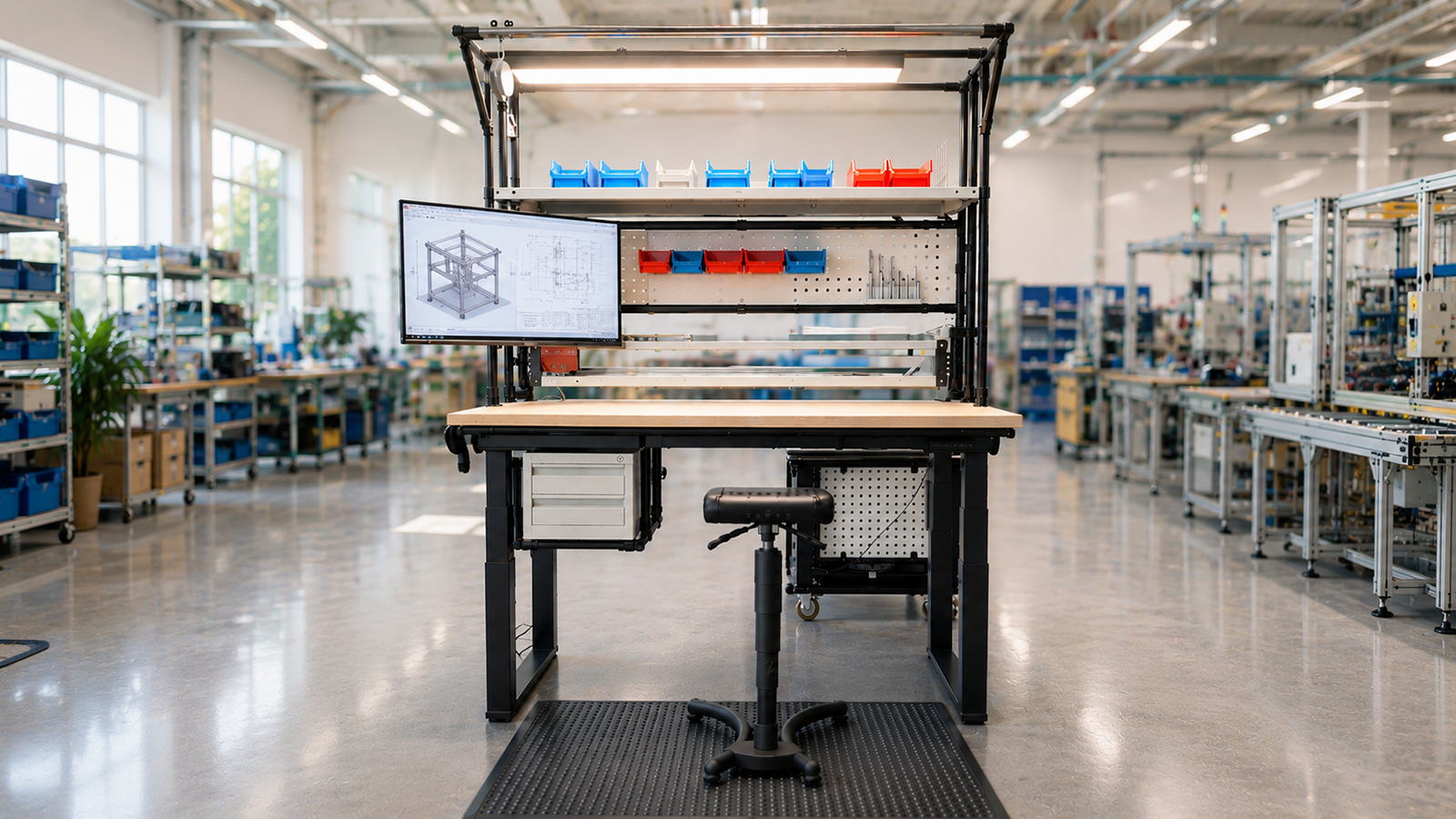
Three areas, one functional solution
At ENPRAG, we have long specialized in solutions for Lean manufacturing as well as metal furniture for workshops, warehouses and industrial facilities. Lean manufacturing also includes material supply and movement using transport trolleys, shelving systems, gravity and roller tracks or conveyor systems.
Designed around the process
The workstation is based on the specific operation, available space and required ergonomics.
Integrated equipment
Metal storage elements can be integrated directly into the structure and tailored to the workflow.
Continuous material flow
Material supply and onward movement can form part of the same solution.
Each function can therefore be handled by the element best suited to it. The result is one solution in which the structure, equipment and material flow all respond to the same process.
First the process, then the specific solution
The design does not begin with a predefined component or construction system. First, we need to understand the workflow, space constraints and the result the new solution is intended to achieve.
Does the operation need better ergonomics, more usable space, less material handling, clearer tool storage, faster replenishment or smoother links between production stages? These requirements determine the right structure, equipment and method of material flow.
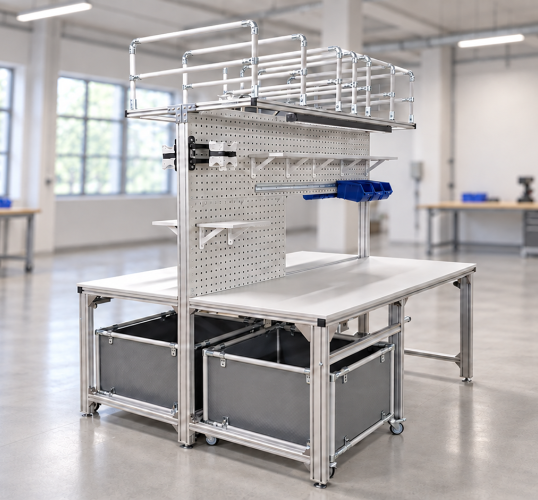
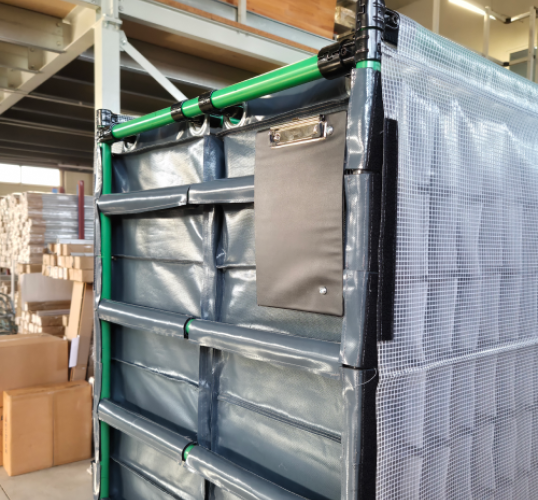
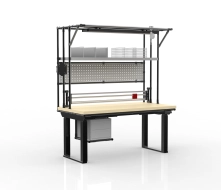
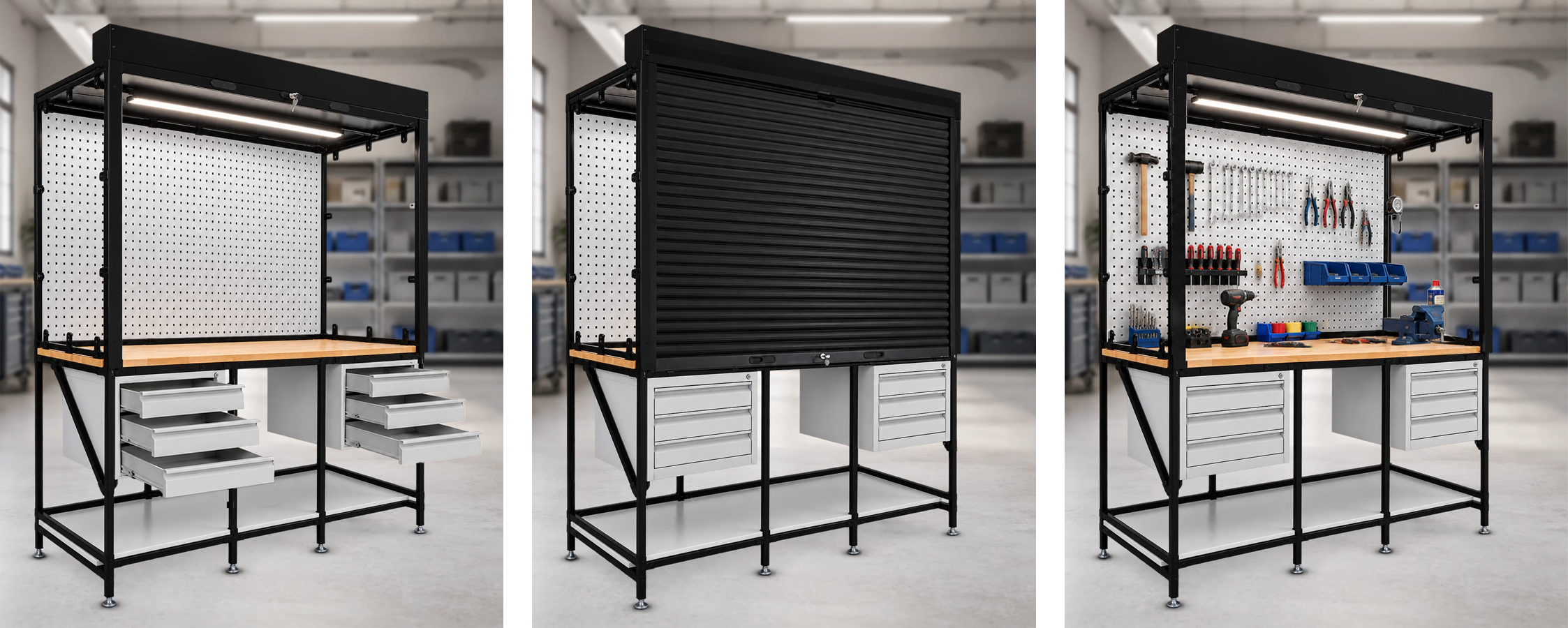
The choice of load-bearing system depends on the specific application. It may be a modular pipe system, aluminum profiles or a more robust square tube modular system. Depending on the requirements, a pipe-based assembly can be equipped with a suspended metal drawer unit, a lockable roller shutter, a perforated panel or tool holders.
What matters is not the system itself, but its suitability for the specific task.
Metal furniture as part of a Lean solution
Metal furniture expands the options for organizing a production space. Tools, gauges, work aids, components and other equipment need to be stored safely and in an organized manner; metal storage elements provide a robust and durable solution for this purpose.
When they are considered at the design stage, their dimensions, position and method of use can be aligned with the workflow, space and ergonomics. Metal furniture is therefore not merely a standalone element beside the structure – both parts can be designed as one integrated whole from the outset.
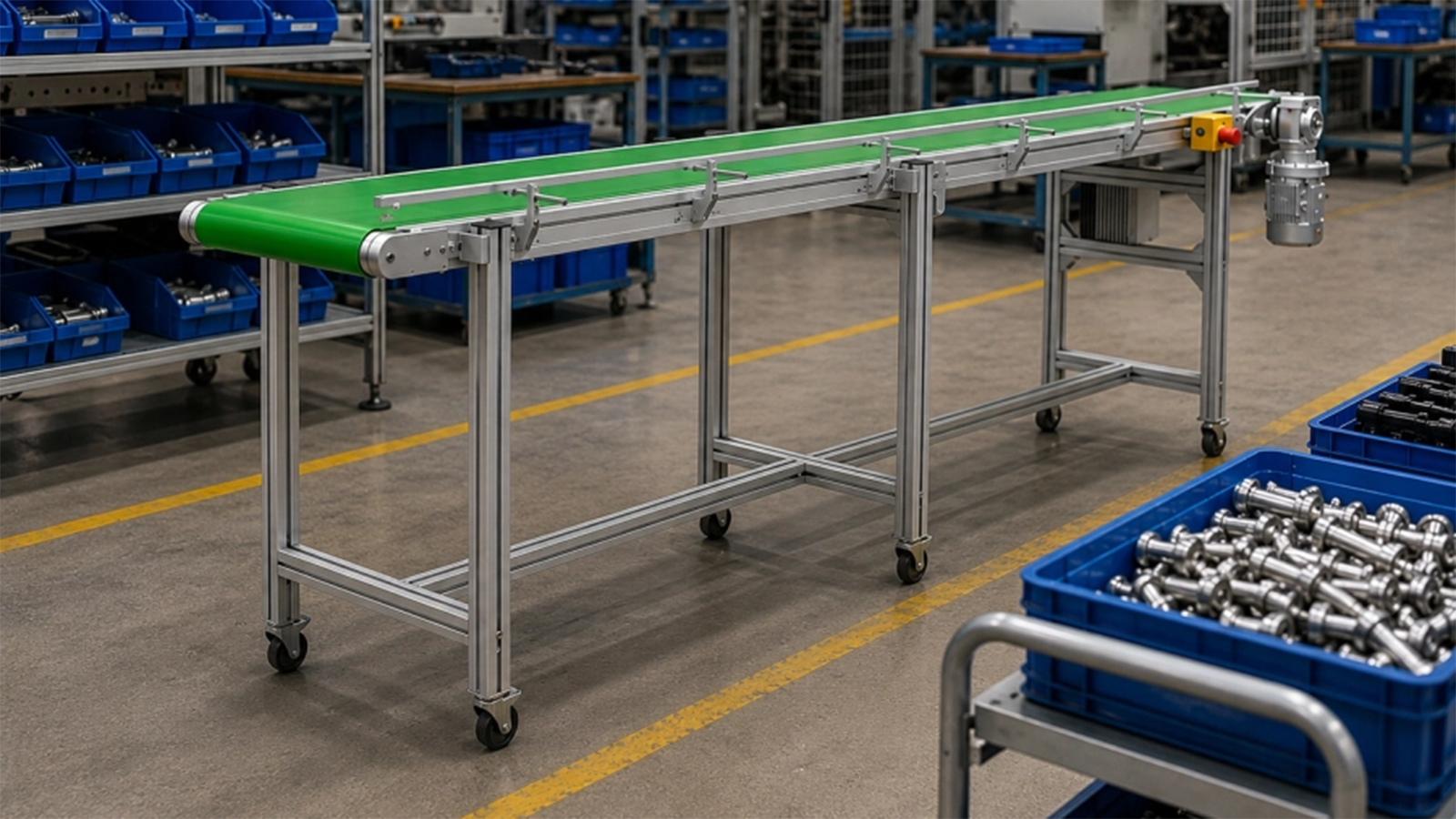
Material flow as part of a Lean solution
Material flow is an equally important part of the design. It is not enough to address only the place where the work is performed. The material must reach the right location, be accessible in a suitable position and continue onwards after processing.
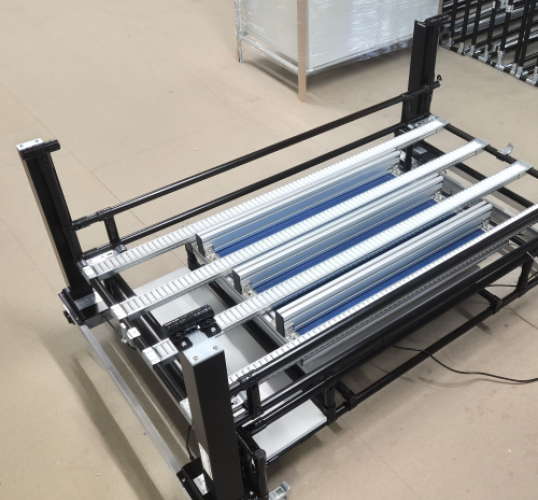
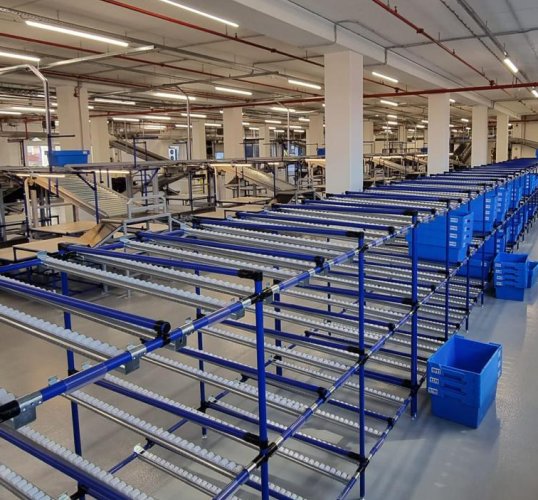
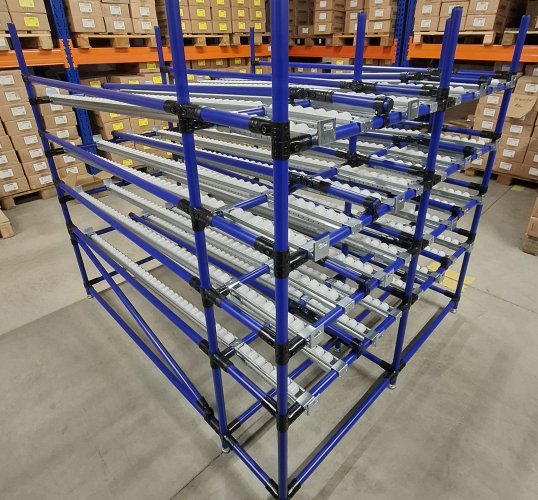
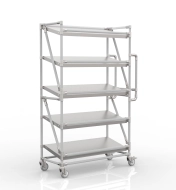
Depending on the specific operation, this role can be performed by supply trolleys, flow racks, gravity or roller tracks and conveyor systems. Material flow should connect with the work process rather than be designed separately from it. A well-designed solution can simultaneously determine where the operator keeps tools, where components are picked up, how crates are replenished and where the product moves after the operation is complete.
What can an integrated solution look like in practice?
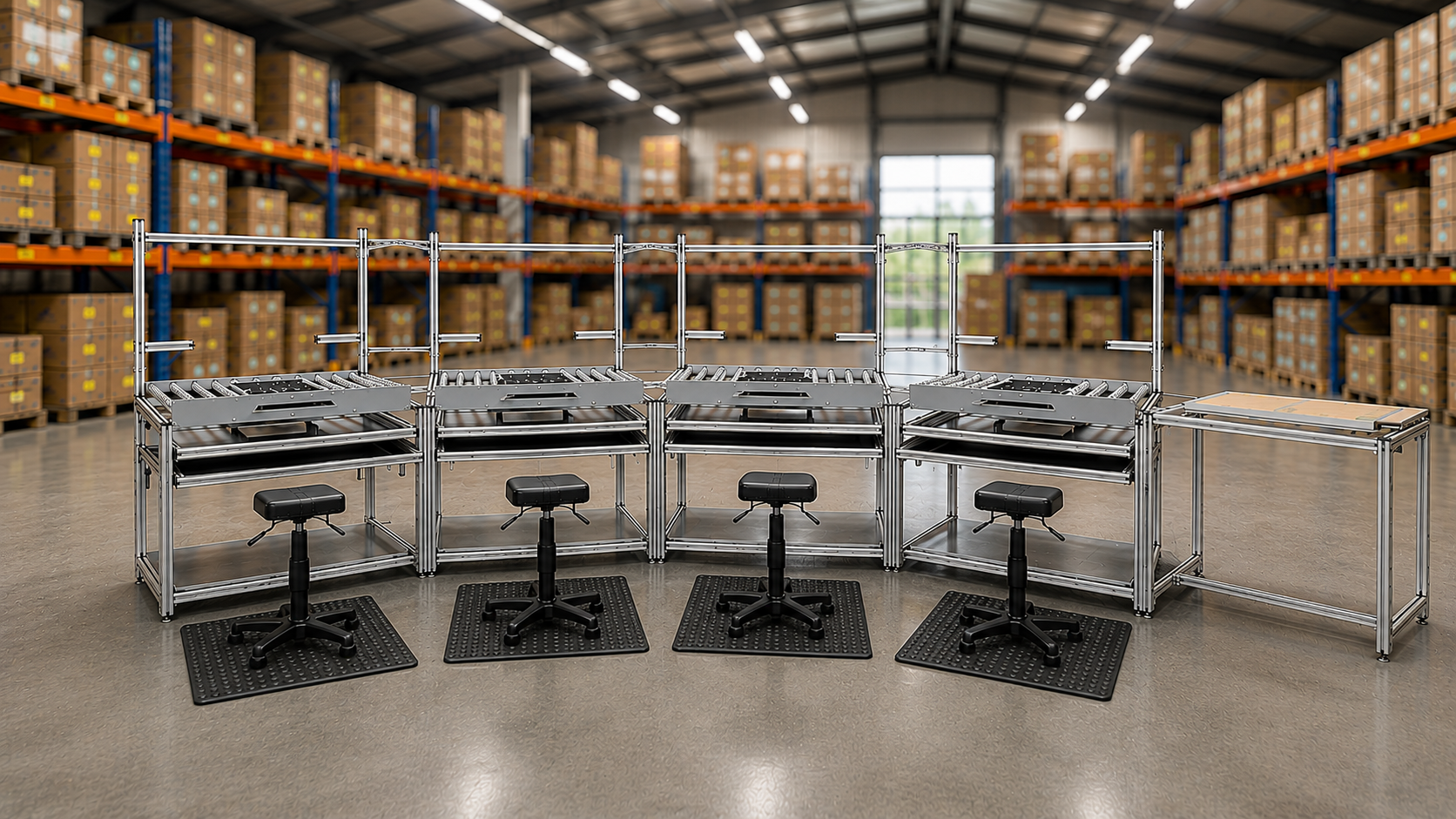
Imagine an assembly process. The structure is designed around the specific workflow. Tools are stored in metal drawer units or on a perforated panel, the required components are positioned within ergonomic reach and material arrives via a gravity or roller track.
Once the operation is complete, the product can move smoothly to the next production stage. The structure, metal equipment and material flow therefore form one functional whole.
Different operations, different solutions
- Production changes frequently: the priority may be modularity and the option to adapt the structure or material supply method later.
- Higher loads are involved: a more robust structure combined with durable metal equipment may be more suitable.
- Material movement is the problem: changing the supply method or adding a gravity or roller track, trolley or conveyor may help.
- Suitable storage space is missing: metal drawer units, cabinets or perforated panels can be integrated directly into the proposed structure.
What do we consider during the design process?
- What needs to improve? Ergonomics, material supply, handling, storage space or production flexibility?
- How does the material move? Where does it come from and where does it go next?
- What does the operator need within reach? Which tools, components and equipment are used most often?
- What requirements must the structure meet? Dimensions, load capacity, mobility, stability or the option of future modifications?
- How should the individual parts of the process connect?
The answers to these questions shape the final solution.
Looking for a solution for your operation?
Tell us about your workflow, available space and the challenge you need to solve. Our specialists will review the options for the structure, storage equipment and material flow with you and propose a suitable solution for your operation.
Discuss your solution with our specialist