

Aluminium Profiles for Strong and Stable Industrial Structures
Structural aluminium profiles make it possible to build rigid frames for workbenches, trolleys and assembly lines without welding. Their slots allow work surfaces, brackets and other equipment to be attached directly to the structure. They combine the capabilities of a robust industrial frame with straightforward assembly and a wide range of accessories.
At ENPRAG, we use aluminium profile systems to design and manufacture assemblies based on the required dimensions, loads and intended use. We also supply profiles separately for customers' own projects.
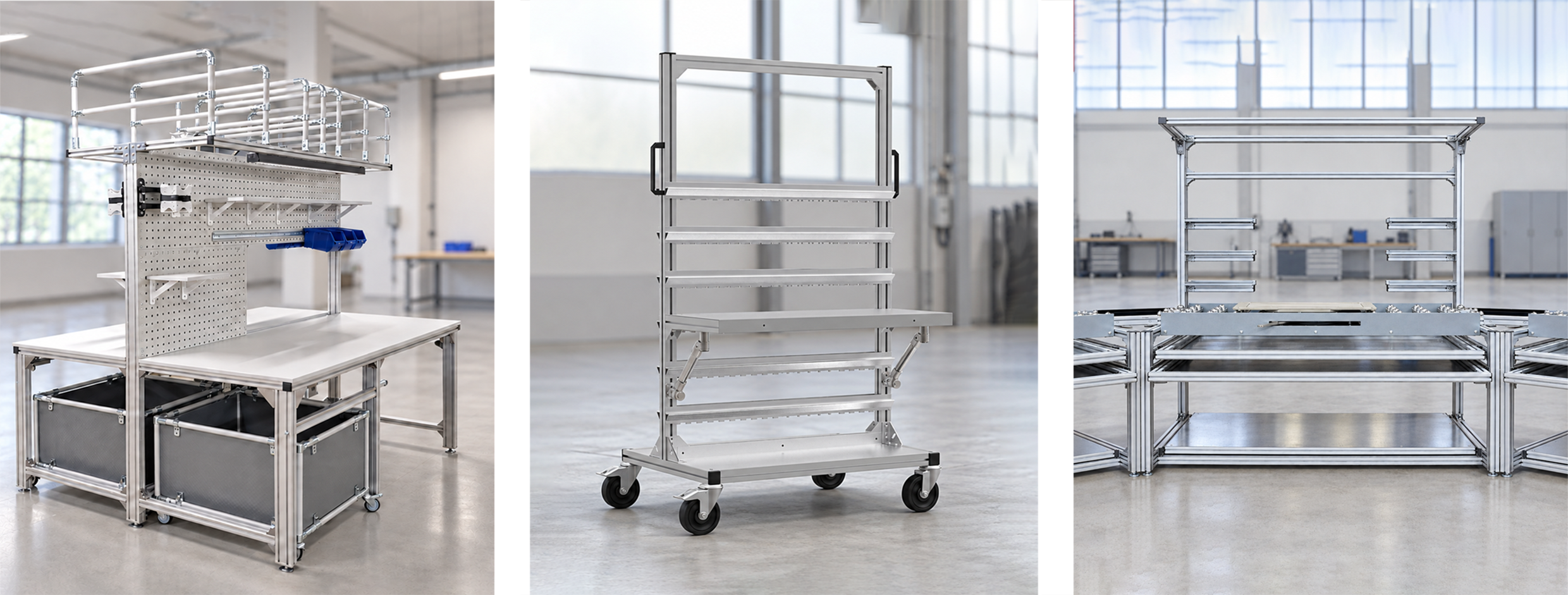
What Do Aluminium Profiles Offer in Practice?
When building industrial structures, both strength and the way the frame is assembled and fitted out matter. An aluminium profile system offers several practical advantages:
Assembly without welding
Profiles are connected using brackets, angles and bolted joints.
Equipment mounted in the profile slots
The slots make it possible to attach shelves, tool holders, panels or cable management using the appropriate accessories.
A structure sized for the application
The lengths of individual elements and the frame layout can be adapted to the available space and the equipment the structure will carry.
Can be dismantled and modified
Bolted joints allow the structure to be altered or extended later.
The same system can therefore be used to create anything from a simple base to a fully equipped workbench or a frame connecting several consecutive assembly stations.
When Do We Choose a Modular Tube System, and When Aluminium Profiles?
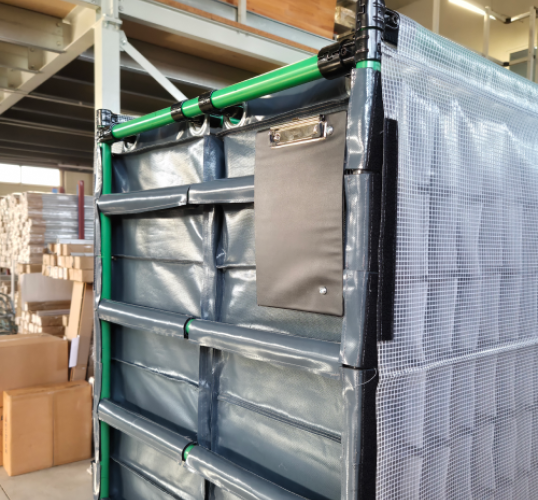
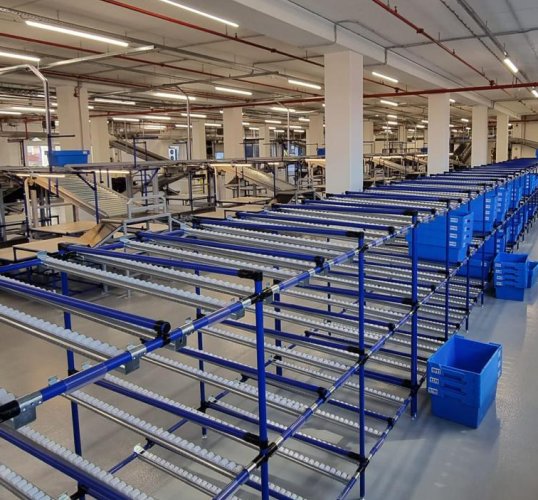
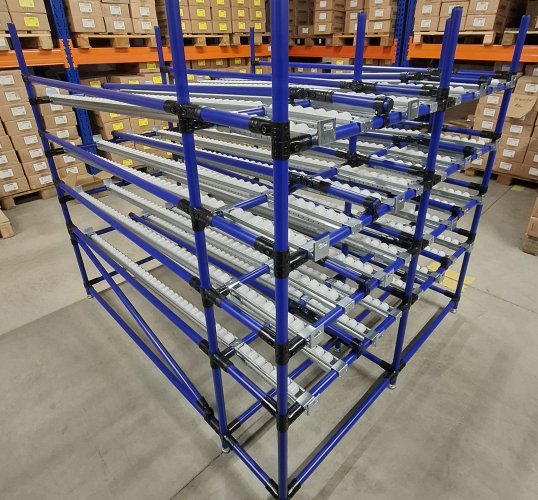
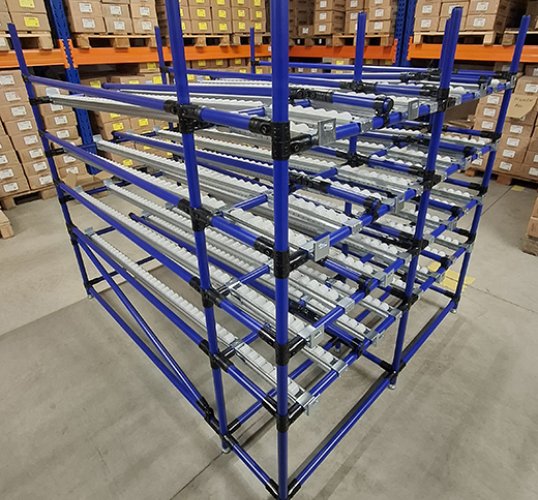
We primarily choose a modular tube system where versatility and frequent reconfiguration in response to production changes are important.
We use aluminium profiles for assemblies exposed to higher loads and more demanding requirements for strength and rigidity in everyday operation. Typical examples include robust workbenches, assembly lines and structures carrying additional equipment.
Both systems can be modified and extended. When selecting the right solution, we consider how often the structure is likely to change, what it needs to carry and the loads it will experience during use.
Which Aluminium Profiles Are Available from ENPRAG?
The core range includes square and rectangular profiles in several sizes. The following overview shows selected options that can be used as the basis for a design.
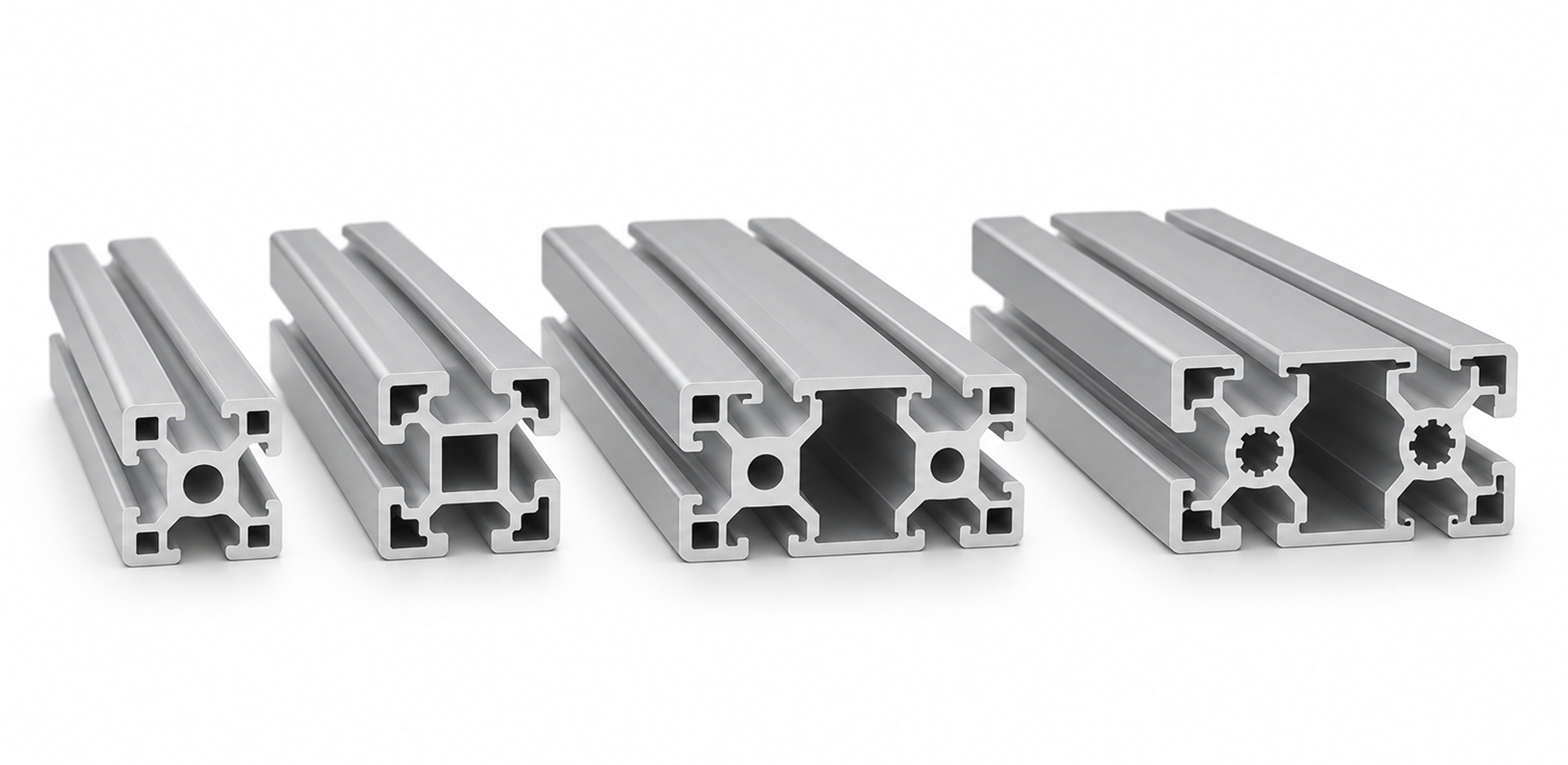
| Profile size | Example designations |
|---|---|
| 30 × 30 mm | KA-3030, MI30x30 B8 |
| 30 × 60 mm | KA-3060 |
| 40 × 40 mm | KA-4040, KA-4040H, MI40x40L B10 |
| 40 × 80 mm | KA-4080, KA-4080H |
| 45 × 45 mm | MI45x45L B10 |
| 45 × 90 mm | MI45x90L B10 |
Individual versions are listed in the ENPRAG aluminium profile range.
Differences in Cross-Section and Design
Square profiles are commonly used for uprights, cross-members and frames. With rectangular profiles, the design can take account of the different stiffness in each direction. Their orientation relative to the load is therefore important.
The same external dimensions do not necessarily mean the same properties. For example, the 40 × 40 mm profile is also available in the heavy-duty KA-4040H version. Selecting the right variant requires an assessment of the technical parameters of the specific cross-section, including its geometry and weight.
Profile Series and Accessories
For the KA and MI profile series, matching brackets and fasteners must be selected according to the slot design and the specifications of the particular product. The same profile dimensions do not automatically mean that the same accessories can be used.
What Determines the Strength and Stability of an Assembly?
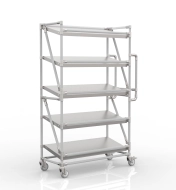
A workbench must reliably support both the workpiece and the tools. An assembly workstation needs a rigid frame that provides firm support during work. A handling trolley must remain stable even when moving with a load.
We therefore assess several factors together during the design process:
- Load and its distribution. A shelf loaded evenly places different demands on the structure than a heavy component positioned in the centre.
- Span between supports. As the unsupported length increases, the requirements for the profile and acceptable deflection change.
- Joints and bracing. The type and arrangement of the connecting elements affect frame rigidity.
- Levelling and mobility. For stationary structures, we consider feet and, where necessary, anchoring. For trolleys, we also assess castor positions and the centre of gravity.
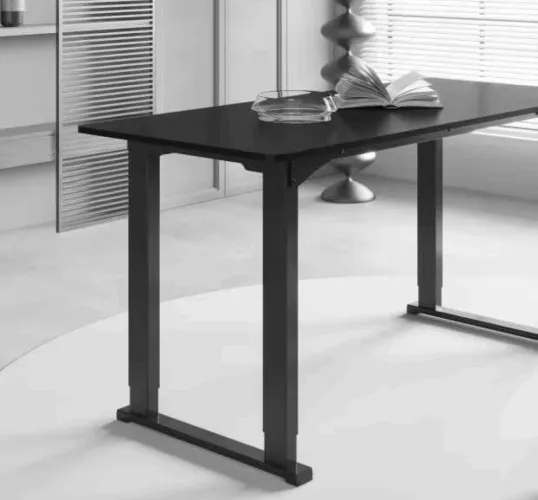
For a longer work surface, for example, it may be advisable to use a different cross-section, add a cross-member or provide an additional support. The right choice depends on the space beneath the worktop as well as where and how the table will be loaded.
Strength and stability result from the design of the complete assembly: its profiles, joints, supports and the way the load is applied.
Connecting Elements and Equipment
Connectors and angle brackets make it possible to assemble the frame in the required shape. Their design, number and position are selected according to the loads involved, and bracing can be added where necessary.
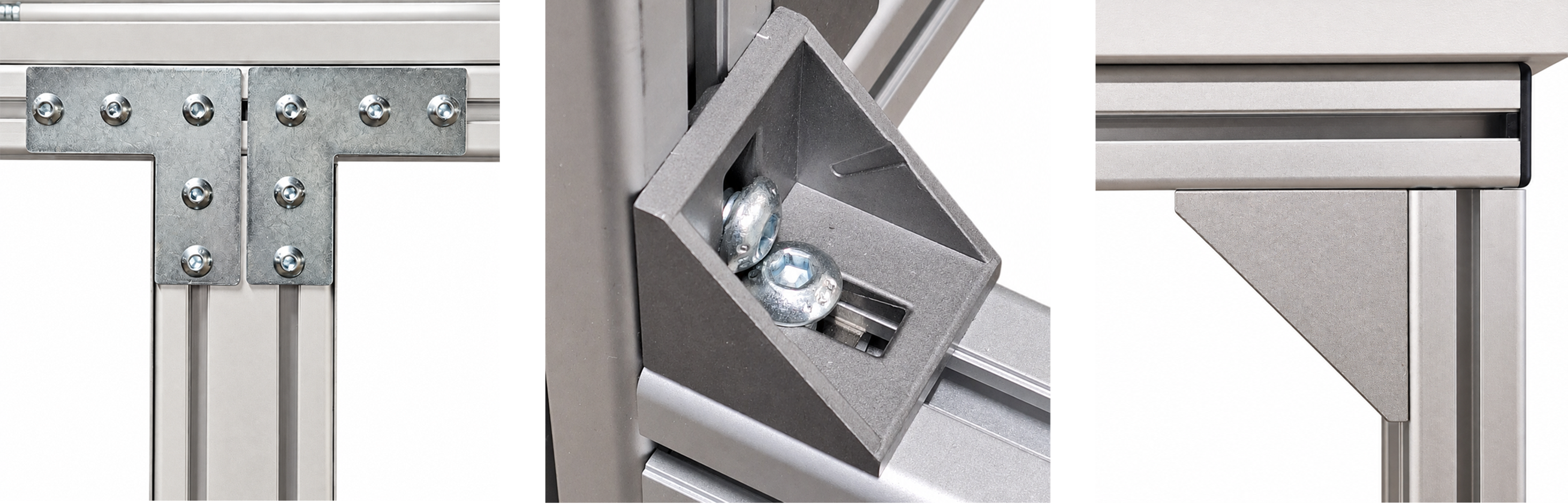
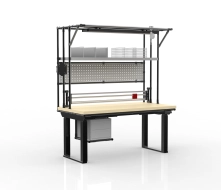
The supporting frame can then be fitted with the equipment required for the task: a worktop, storage shelves, a metal drawer cabinet, a protective panel or tool holders. The slots in the profiles provide attachment points and make it possible to position these elements along the structure as needed.
This means that the supporting structure and the method used to attach the equipment employees work with every day can be addressed together during the design process.
An Aluminium Structure in Practice
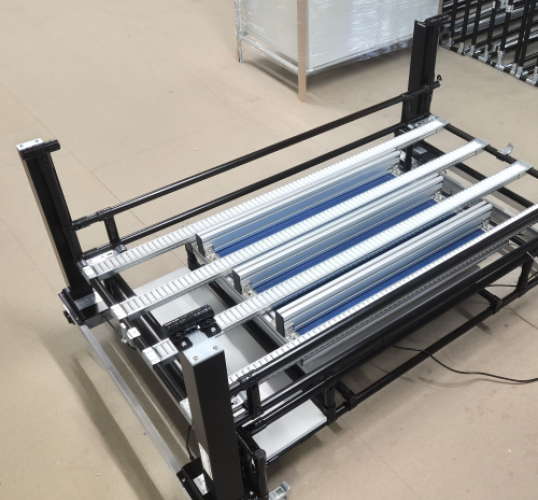
One of our completed projects is an assembly line with a retractable ball transfer track and locking mechanism, designed and manufactured by ENPRAG.
The workpiece travels on ball transfer units to the workstation. Once the ball transfer units are lowered below the level of the worktop, the workpiece rests on the work surface for the assembly operation. Raising them again prepares it for transfer to the next station.
Here, the aluminium profile system forms the supporting frame for both the work surfaces and the ball-transfer mechanism. It provides secure mounting points for the individual components and connects the workstations into an assembly that follows the required production sequence.
PROJECT VIDEO
Assembly Line with a Retractable Ball Transfer Track and Locking Mechanism
See the workpiece move into position, settle onto the work surface and continue to the next station.
Within a single assembly, the workpiece can be transferred, positioned on the work surface and passed on once the operation is complete.
From Individual Profiles to a Complete Solution
You can purchase aluminium profiles separately from us, together with brackets and fasteners for your own structures. Specific components are available in our online shop.
If you need a complete solution, we can design and manufacture an entire assembly to your requirements, including the necessary equipment.
Planning a Workbench, Trolley or Assembly System?
Send us the basic dimensions, expected load and a description of the intended use. We will review the requirements with you, recommend a suitable design and manufacture the assembly for your operation.
Contact us