


Lean manufacturing is more than a set of isolated principles or a one-off cost-cutting project. It is a way to identify waste consistently, streamline workflows and create more stable, safer and more flexible operations. The right method should therefore be chosen based on the problem you need to solve, rather than its popularity.
Start with the problem, not the name of the method
Unnecessary material transport, lengthy machine changeovers, high inventory levels, unplanned downtime and poorly organised workstations can all occur at the same time in a production environment. Each requires a different approach. Before choosing a specific tool, the team should describe the current situation, identify the main constraint and set a measurable objective.
One method alone is usually not enough. For example, 5S helps create an organised workplace, visual management makes key information accessible, and Kaizen combined with the PDCA cycle enables further improvement. The methods complement one another and should form a coherent system.
| Problem | Suitable method | Main focus |
|---|---|---|
| Clutter, time spent searching for tools and unclear rules | 5S and visual management | Organisation, standards and an easy-to-navigate workplace |
| Unnecessary motion, waiting, inventory or overproduction | MUDA | Identifying and reducing activities that add no value for the customer |
| A need for continuous improvement | Kaizen and PDCA | Team involvement, testing changes and sustaining results |
| High inventory levels and irregular material flow | Kanban | Managing replenishment according to actual demand |
| Lengthy changeovers and difficulties producing small batches | SMED | Reducing and standardising production equipment changeovers |
| Unplanned shutdowns and inconsistent machine performance | TPM | Preventive care and clearly defined maintenance responsibilities |
| Process variation and recurring defects | Six Sigma and DMAIC | Quality management through data and systematic root cause analysis |
| A disconnect between strategy and day-to-day improvement | Hoshin Kanri | Translating long-term objectives into activities across the organisation |
5S: the foundation of an organised, standardised workplace
The 5S method helps remove unnecessary items, organise equipment, maintain cleanliness, establish standards and sustain agreed practices. It is useful where employees waste time looking for tools or materials, where it is unclear what belongs where, or where different shifts follow different routines.
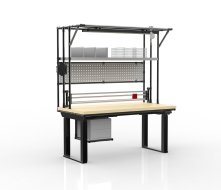
5S is about more than tidying up. The aim is a workplace where any deviation from the standard is immediately visible. Marked locations, shadow boards, colour coding, information display frames and floor markings all support this. This is where 5S naturally connects with visual management.
MUDA: identify activities that add no value
MUDA means waste: the use of time, space, materials or capacity without corresponding value for the customer. In manufacturing, the most commonly monitored forms are unnecessary transport, excess inventory, unnecessary motion, waiting, overproduction, overprocessing and defects. In practice, it is also useful to consider employees’ unused potential.
Waste analysis should take place where the work is actually done. The team observes the flow of materials and information, records obstacles and identifies which steps genuinely create value for the customer. Only then does it choose suitable changes, such as adjusting the layout, shortening a replenishment route or reorganising a workstation.
Kaizen and PDCA: making improvement part of everyday work
Kaizen is based on continuous improvement and the involvement of people who know the process through their daily work. It does not have to involve expensive projects. Many effective changes start with small suggestions that can be tested and evaluated quickly.
The PDCA cycle provides a practical structure for improvement: plan the change, implement it on a controlled scale, check the outcome and then adjust or standardise the new approach based on the findings. Repeatability matters. If the improved state is not incorporated into standards and regular checks, operations often return to old habits.
Kanban: smoother flow and demand-driven replenishment
Kanban connects successive processes and helps manage material movement according to actual consumption. The aim is not to hold as much stock as possible “just in case”, but to deliver the quantity required at the right time and to the right place.
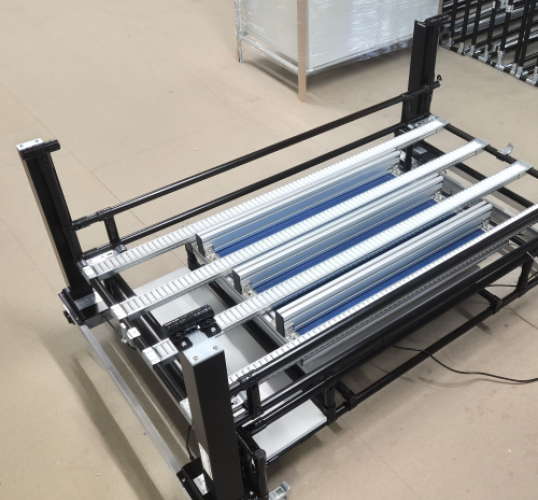
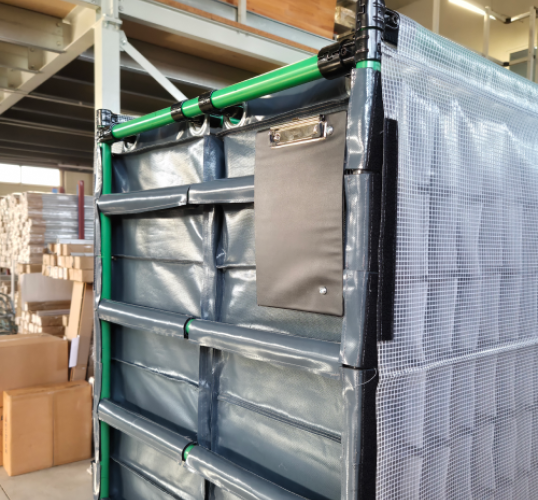
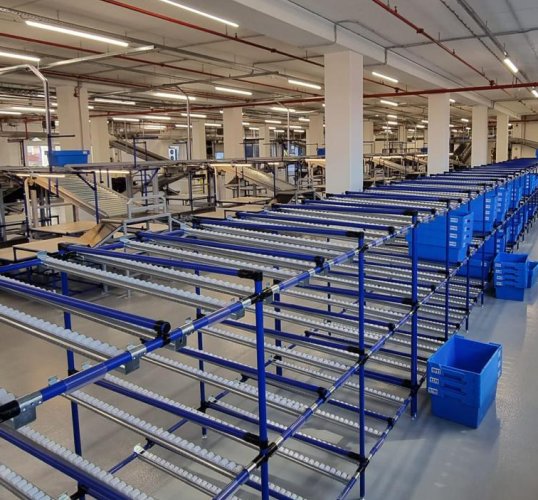
An effective Kanban system requires clear replenishment rules, suitable load carriers and well-organised supply points. In practice, it can be supported by gravity flow racks, trolleys, parts storage units and modular structures that can be adapted to changes in the production programme.
SMED: shorter changeovers and more flexible production
SMED is used to reduce production equipment changeover times. The team first observes the changeover at the workstation, distinguishes between tasks performed while the machine is running and those performed while it is stopped, and looks for ways to carry out preparation outside the machine’s downtime.
Improvements often come from a standardised procedure, tools and materials prepared in advance, clearly assigned roles, training or minor technical modifications. Shorter changeovers free up capacity and make it easier to produce smaller batches.
TPM: less unplanned downtime
Total Productive Maintenance, or TPM, aims to keep equipment running reliably and prevent unplanned failures. Maintenance is not solely the responsibility of a specialist department: simple checks, cleaning and the early detection of abnormalities can form part of operators’ standard work, while specialist interventions remain the responsibility of qualified personnel.
TPM is particularly useful where breakdowns, minor stops or deteriorating equipment condition disrupt the production schedule. Its impact should be monitored using predefined operational indicators.
Six Sigma and DMAIC: when data is essential
Six Sigma is a data-driven approach focused on reducing variation and defects. Specific problems are often addressed using DMAIC: define the problem, measure the current state, analyse the causes, implement improvements and control the new process to sustain the results.
This approach is particularly suitable for recurring defects or unstable processes where a single organisational change is not enough. It requires reliable data, a clearly defined indicator and a disciplined approach to verifying root causes.
How to get started with lean manufacturing in practice
The safest approach is not to introduce every known method at once. It is better to choose one workstation or process with a visible problem and set up a pilot project.
- Describe the current situation. Observe material flow, employee movement, waiting, inventory, defects and points where information is missing.
- Set a specific objective. Define what needs to change and which indicator will demonstrate the result.
- Choose a suitable method. Select the tool based on the cause of the problem, rather than the latest trend.
- Involve employees. People working in the area understand the practical obstacles and can help develop a workable solution.
- Test the change on a small scale. A pilot helps identify shortcomings without unnecessarily disrupting the entire operation.
- Standardise and keep improving. Document the successful approach, make it visible and review it regularly.
How Enprag can help you implement lean manufacturing
Every operation has different production processes, space constraints and material handling requirements. Enprag therefore combines lean manufacturing principles with the design of a specific workstation, structure or material flow.
1. Operational analysis
Together, we map current work processes, weak points and material flow. We help set priorities and define objectives against which the proposed improvement can be evaluated.
2. Solution design
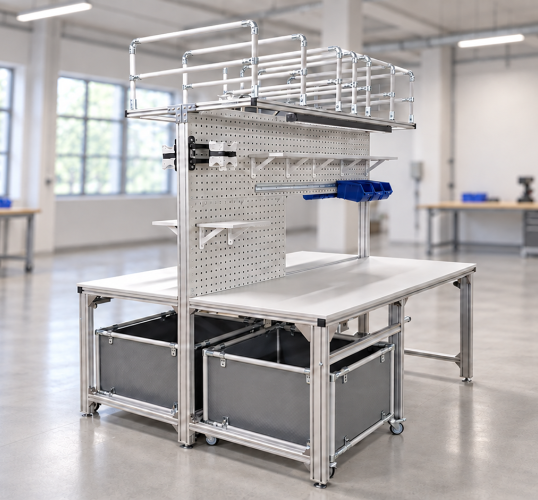
Based on the needs identified, we develop a design for a structure, layout or workstation. We focus on ergonomics, reducing unnecessary handling and maintaining flexibility. Modular tube systems, profile systems and other modular construction systems can be adapted to the specific process.
3. Delivery and implementation
Enprag can supply individual components, a finished structure or a more comprehensive solution. Depending on the scope of the project, on-site assembly and commissioning can also be arranged.
4. Further development and optimisation
Production requirements change. Modular solutions allow further modifications or expansion when the product range, layout or replenishment arrangements change. Improvement can therefore continue without rebuilding the entire workstation each time.
You can find more information about the systems and how we work with you in our overview of Enprag lean manufacturing solutions. An overview of the individual tools is also available on our lean manufacturing methods page.