


Lean manufacturing methods
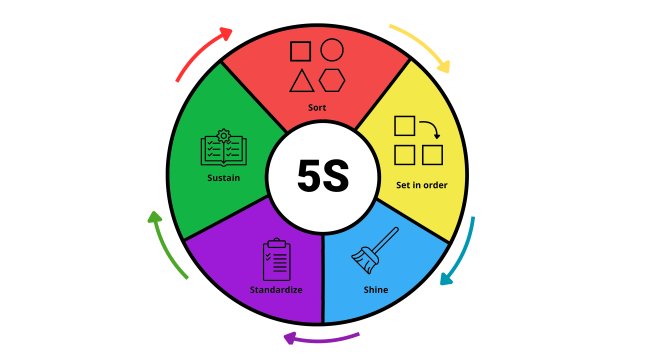
The 5 S Method
The 5S method is the result of a commitment to remove unnecessary items from workstations, ensure order, cleanliness and instill methodical discipline across processes using Japanese philosophy:
Seiri: Sort out, eliminate the unnecessary
Seiton: Organize, a place for everything and everything in its place
Seiso: Clean, keep clean, remove from sources of impurities
Seiketsu: Standardization. Flat application of cleanliness and order
Shitsuke: Maintenance. Permanent support for joint compliance with established rules
Six Sigma
Six Sigma is a methodology providing a way to detect errors before they occur in order to increase customer satisfaction. It is a statistical methodology providing companies with a way to make fewer mistakes in all their activities by eliminating discrepancies before they occur. Six Sigma is a highly disciplined systems approach that is based on working with data and facts. The general goal of Six Sigma is to master processes so that no more than 3.4 errors occur per million opportunities.
Sigma values are often expressed as "DPMO"
(Defects Per Million Opportunities = number of defects per million opportunities).
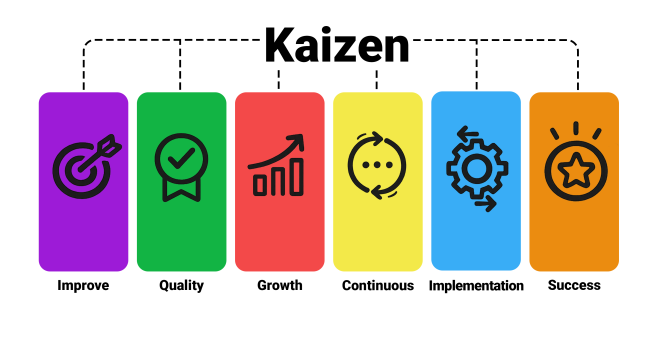
Kaizen
Kaizen means change for the better. It is applicable across all activities, it is an approach to continuous improvement. It is a sophisticated and perfectly organized system of work. Every improvement, no matter how small, needs attention. All employees can participate in the improvement process. Improvements that can be quickly evaluated and implemented do not require high investments.
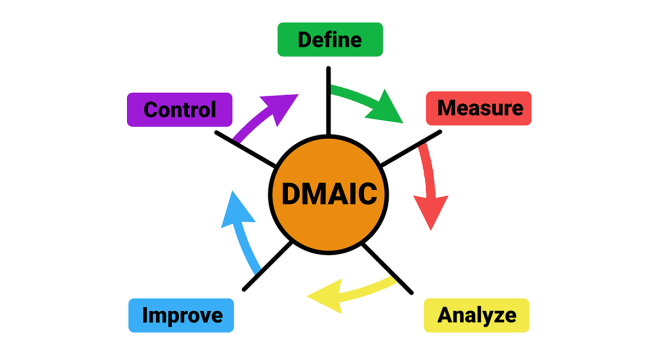
The DMAIC method
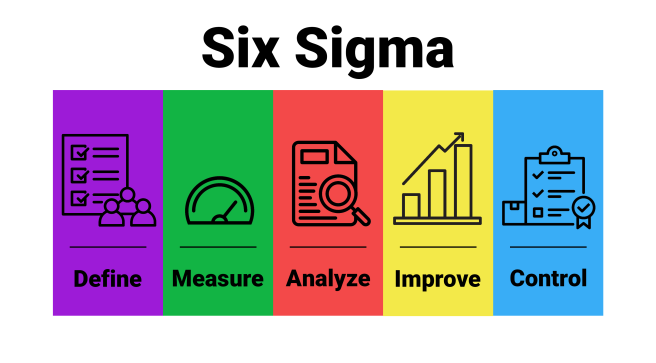
The DMAIC method is an integral part of the Six Sigma method, it is intended for successful management of the process leading to continuous improvement. This is an advanced PDCA cycle. The method is defined by five phases for successfully implementing change leading to improvement:
Define: The first phase involving defining objectives, gathering information and describing the state to be achieved. A team of workers is defined. The way in which the goal is to be achieved is not part of the definition, but the goal itself is defined.
Measure: Documenting the step-by-step steps leading to the set goal is a key factor. The gradual fulfillment of the goal can be documented according to predefined measurements and indicators. The measurement phase aims to collect and evaluate data on the current situation (occurrence of defects, recording of inputs and outputs).
Analyze: The information found in the previous step must be analyzed and the potential for improvement evaluated. The goal is to find out the critical factors that have a major influence on the occurrence of defects.
Improve: Eliminating the real cause of defects, establishing new processes and optimizing existing processes with the aim of optimizing input costs and increasing customer satisfaction.
Control: If the cause of the problem is correctly evaluated, the processes are successfully set and the improvement is achieved, the resulting changes must be implemented and standardized. Part of the final phase is monitoring the results achieved in a certain period and ensuring the permanent maintenance of the new state.
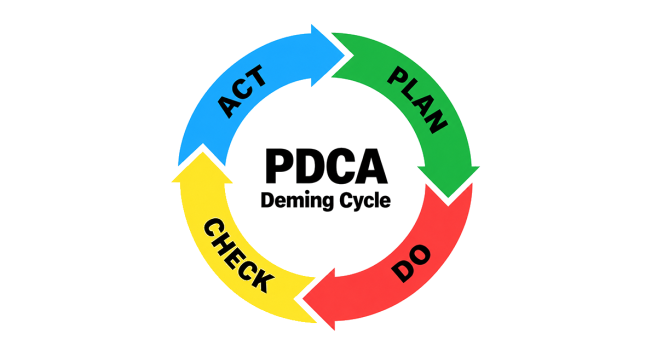
PDCA - Deming cycle
PDCA - Deming cycle - Plan-Do-Check-Act is a system approach to management.
It is a method of gradual improvement in the form of repeated implementation of four basic activities:
- plan (plan) - planning the intended improvement (intention)
- do (do) - implementation of the plan
- check - (check)
- act - (one)
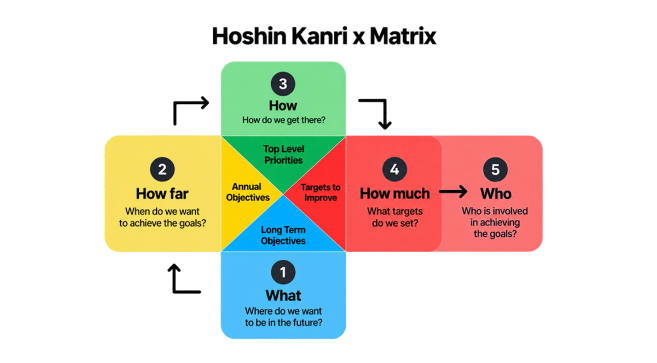
Hoshin Kanri
Hoshin Kanri means managing the business according to visions and goals with the involvement of all teams in managing processes. Top management creates a strategic plan that is considered piecemeal, not as a whole. He passes it on to middle management, so it is a cascade effect or vertical diffusion. The inclusion and participation of all components of the teams is an important factor. Progress must be consistently assessed and any change must be for the better.
Hoshin Kanri gives us the answer to key questions such as:
- Where do we want to be in the future?
- How do we want to achieve this?
- When do we want to achieve the goals?
- Who will participate in achieving the goals?
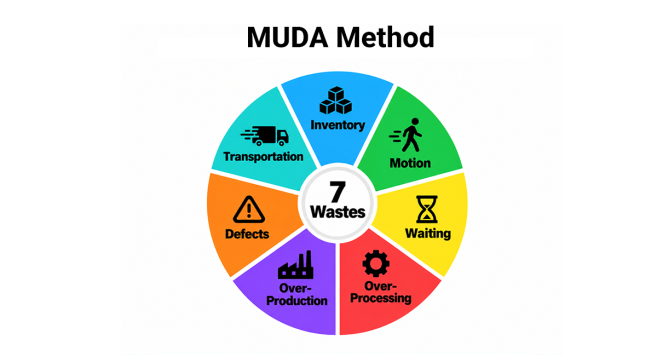
The MUDA method
MUDA in the lean concept means waste. In the production sector, we distinguish 7 types of waste:
- Transport (Relocation) – unnecessary movement of material and products
- Storage - limitation of excess inventory
- Movement – inefficient movement of workers
- Waiting – Downtime and waiting are a waste
- Overproduction - production beyond customer requirements
- Redundant processing - quality and processing that is no longer required by the customer is a waste
- Defects - production of defective products
MUDA in administrative activities:
- Human potential - unused potential of workers and their creativity
- Inappropriate or non-functioning information systems
- Unclear strategy - unnecessary implementation of activities that are not in line with the company's strategy
- Not taking advantage of a market opportunity is a waste
- Unnecessary administration and inefficient system is a waste
- Customer burden
TPM - Totally Productive Maintenance
TPM = Total Productive Maintenance. The purpose of TPM is to maximize the overall performance of the systems. Total - totally productive maintenance. It is a set of activities leading to the operation of the machine park in optimal conditions and maintaining these conditions. The goal of TPM is to prevent unplanned outages of production technology - machines thanks to a system of total preventive maintenance in which roles are clearly defined.
TPM consists of separate programs:
- independent maintenance of SÚ TPM
- planned maintenance of the TPM PU
- smooth acceptance of HP TPM
- training
- increasing the use of machines
- technical improvement of machines
SMED
SMED = Single-Minute Exchange of Die. A method of reducing production equipment retyping times.
The Rapid Change Program (SMED) aims to:
- To get that part of the machine's capacity that we lose by its long rebuilding.
- To ensure a quick transition from one type of product to another, thereby enabling production in small batches. Small-batch production offers greater flexibility and lower production complexity.
The change procedure is based on a thorough analysis of the adjustment, which is carried out by observation directly at the workplace. Radical shortening of adjustment times is gradually achieved by changing the organization, standardization of the adjustment procedure, team training, special aids and technical modifications of the machine. The SMED method is often also part of the TPM program.
Visual management
Visual management is a form of communication that aims to create a smoothly functioning workplace using visual control elements. These are used to identify problems, reduce waste, reduce production costs, shorten delivery times, reduce inventory, create a safe work environment and increase profits.
The workplace, which functions smoothly using visual control elements, is clearly arranged, methodically managed and clearly organized.
The implementation of this method brings with it many advantages and savings:
- productivity improvement
- making problems visible (for example, thanks to information frames)
- clarity and organization of the workplace (for example, using perfpanels for workshop tables and related accessories)
- increased safety (using floor markings)
- time saving
- facilitating communication between employees and management
- increasing work discipline
- space for employees' opinions
- employee motivation
- improvement of corporate culture
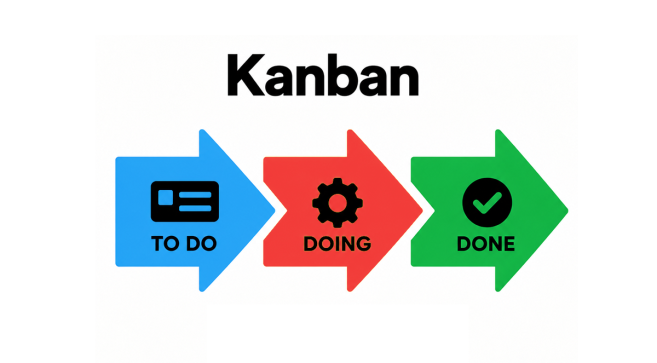
Kanban
The Kanban system serves as a tool for fine-tuning production and connecting individual processes. The essence of the concept of the kanban method is based on providing only those components from the supplier, warehouse or production that are needed, in a given quantity and at a given time so that there is no excess inventory.
What we should achieve in specific parameters:
- reduction of stocks in production
- reduction of adjustment times
- reduction of continuous production times
- reduction of the need for surfaces
- reduction of personnel costs
- reduction of quality costs