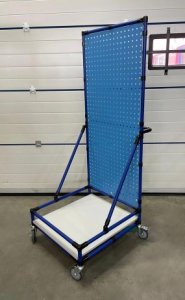


Find the height of your work desk
Correctly setting the height of a work desk is far more important than it may seem at first glance. Whether you work in an office, a workshop, manufacturing, or from home, the height of your workstation has a direct impact on comfort, health, and overall work efficiency. An incorrectly chosen desk height can lead to fatigue and pain in the back, neck, or wrists. On the other hand, an ergonomically well-adjusted workstation helps the body work naturally and without unnecessary strain.
Why the height of a work desk is so important
The correct desk height brings several key benefits:
- Ergonomics – supports proper posture and reduces the risk of musculoskeletal disorders
- Comfort – allows comfortable work both sitting and standing
- Productivity – a comfortable workstation increases concentration and work accuracy
Long-term sitting is now considered by experts to be an independent risk factor for the development of chronic diseases. This is why more and more companies and institutions are interested in height-adjustable work desks.
What research says about height-adjustable desks
Current studies show that height-adjustable (so-called sit-stand) desks have a positive impact on employee health and workplace well-being.
Reduction of sedentary behavior
Research summarized, for example, in NIHR Evidence reviews confirms that height-adjustable desks significantly reduce the total time spent sitting during the workday. Sedentary behavior has long been associated with an increased risk of lifestyle-related diseases.
Improved musculoskeletal comfort
Some intervention studies with several months of follow-up show a reduction in back pain and muscle fatigue among people who alternate between sitting and standing, compared to those who work only while sitting.
Improved workplace well-being
Other studies have recorded an increase in subjective feelings of vitality, job satisfaction, and overall well-being, which can also have a positive effect on performance and long-term work motivation.
Interestingly, the best results were achieved in programs that combined height-adjustable desks with education and support for proper work habits. Participants sat up to 60–90 minutes less per day than control groups.
Manual vs. electric height adjustment
When choosing a height-adjustable desk, it is important to consider how often and by whom the workstation will be used.
Manually adjustable desks
A major advantage and frequent requirement is situations where electricity is not available.
Manually adjustable desks are simple, mechanically reliable, and low-maintenance.
Electrically adjustable desks
Electric solutions allow quick and convenient height changes during the day, easy alternation between sitting and standing, and simple adjustment for multiple users.
Clear height-adjustment table by Enprag
In Enprag’s product range, you will find a wide variety of solutions, from manually adjustable frames and legs to electric systems. A clear height-adjustment table will help you quickly orient yourself and choose the option that best meets the specific requirements of your workplace.

Tips for correct work desk adjustment
- While working, your hands should be at elbow height, with wrists in a natural, relaxed position.
- When working while standing, stand upright with your body weight evenly distributed.
- Adjust the desk height according to the task – writing, computer work, and manual tasks may each require different settings.
An investment in health and efficiency
The correct work desk height is not just a technical detail. It is a long-term investment in health, comfort, and productivity. Whether you choose a manual solution that does not require electricity or an electrically adjustable system, the goal is always the same: a workstation that respects the human body and supports efficient work every day.
Are you interested in anything else?
More articles
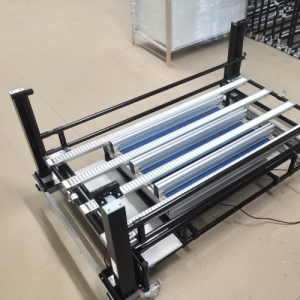
Height-Adjustable Cart with Integrated Scale
Read the article
Logistics Cart with Textile Inserts
Read the article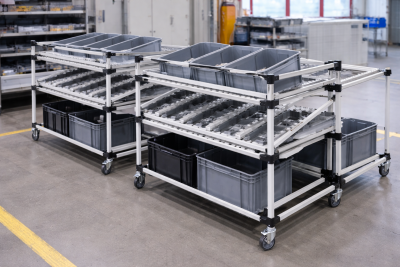
Production Line Design and Implementation (One Piece Flow)
Read the article
Kanban Method Step by Step
Read the article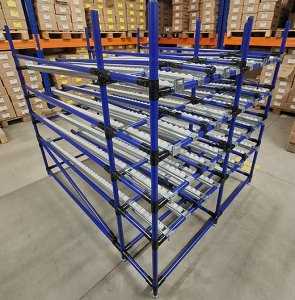
Gravity flow rack with roller tracks
Read the article